Farm Junction
Turning an established Lagos food operator into the kitchen engine for households and businesses — a community-first demand fulfilment engine.
Model
Community-first demand
Modules
4 workstreams
Relationship
JV equity
Farm Junction is an established agricommerce brand — affordable food procurement serving the Opic, Ogudu and Ajah corridors, with a fulfilment centre and retail outlet at OPIC, Isheri. Label Brandspace approached them with a distribution engine: turn a working food operation into the kitchen engine for Lagos households and businesses.
The problem
The procurement was already strong. Farm Junction could buy well and sell affordably — that was never the constraint. What the business did not have was demand it could see before produce moved. Buying is walk-in and radius-bound, so volume is capped by who happens to be nearby that week; spoilage on unsold stock is absorbed entirely by the operator; and expansion means carrying more inventory risk rather than serving more kitchens.
The read
The constraint was distribution and demand visibility, not supply or price. Aggregate the demand before produce moves and two problems close at once: spoilage drops because volume is pre-committed, and reach grows without proportionally growing stock risk. That is a demand engine, not a supply-chain rebuild.
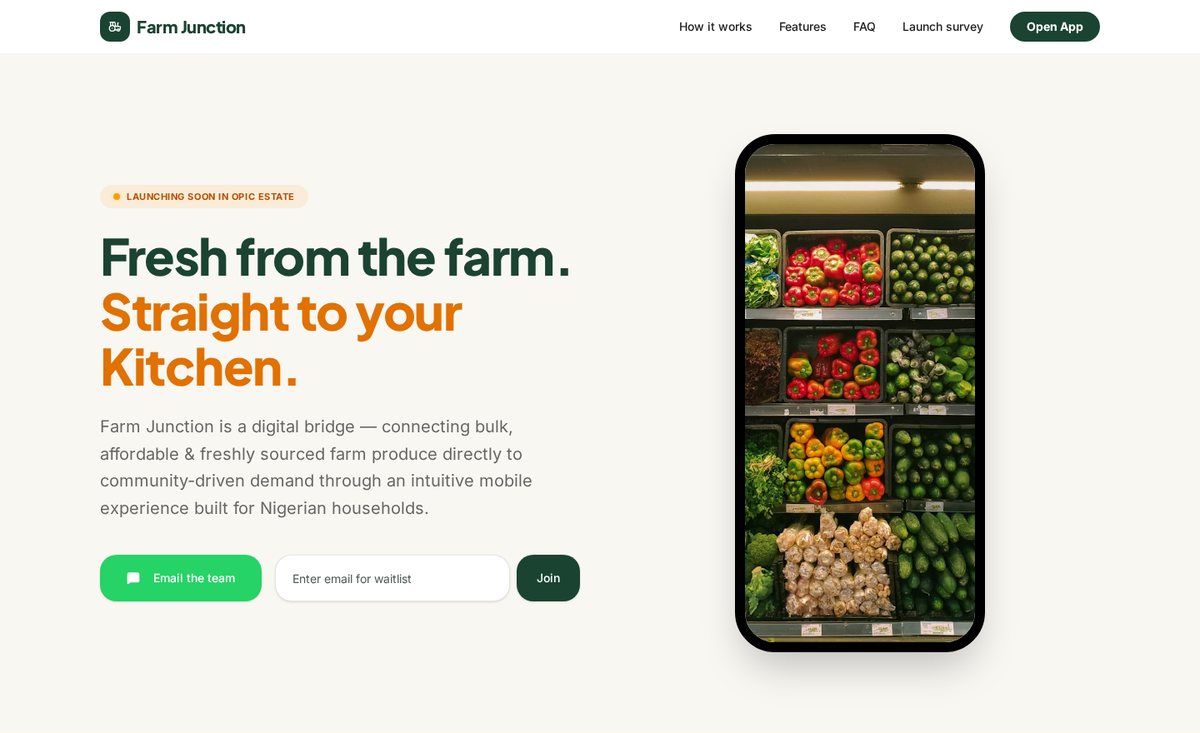
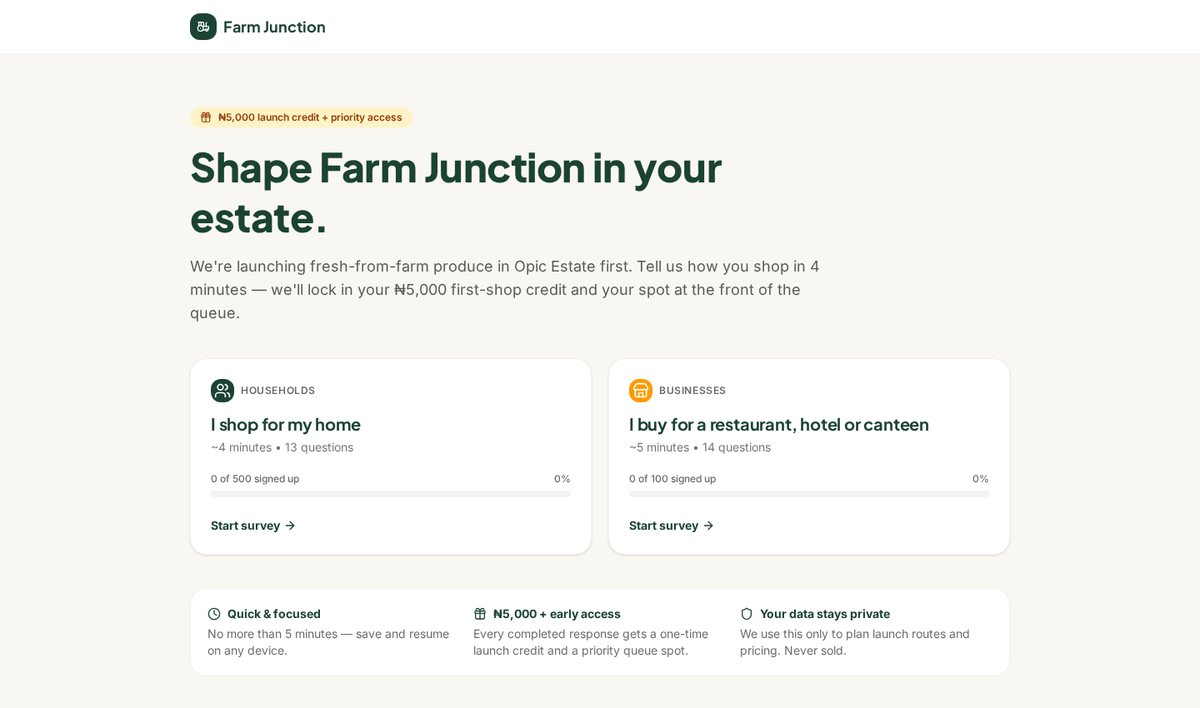
Phase 0 mapped the existing customer base, the fulfilment footprint and the unit economics before the launch build. Demand is not assumed: a structured household and business survey (13 and 14 questions) captures shopping behaviour, basket size and price sensitivity per cluster, and doubles as the pre-launch waitlist with a first-shop credit attached.
Aggregate the demand before the produce moves. Spoilage and reach are the same problem seen from two ends.
The approach
Label approached Farm Junction with the solution rather than answering a brief, and the engagement was signed as a joint venture inside 90 days — first conversation in June, JV signed by August. Label carries product, brand and growth inside the venture; Farm Junction carries procurement, the fulfilment centre and the trading relationships it already had.
What we built — four modules
01 · Foundation & digital infrastructure
The consumer marketplace and the operating spine behind it: catalogue and shop, cart and checkout, wallet, loyalty and referrals, accounts and estate-level addressing, plus an admin console covering orders, inventory, delivery, finance, customer and business CRM, promotions, subscriptions and team permissions. One system of record for what was ordered, what moved and what was paid — replacing an operation that knew its stock but not its demand.
02 · Last-mile logistics planning
Estate-clustered fulfilment out of the existing centre rather than city-wide dispatch. Delivery windows are planned against grouped demand, and riders work a dedicated dispatch app for assignment, pickup, en-route status and proof of delivery — the same order object the admin console and the customer both read.
03 · Prelaunch activation
The launch survey funnel, waitlist and first-shop credit, cluster by cluster. The household and business tracks are separate instruments because a canteen buying weekly wholesale and a household buying a monthly staples box behave nothing alike. Survey responses set launch routing, pricing and the opening assortment before a single delivery run.
04 · Digital conversion & community growth
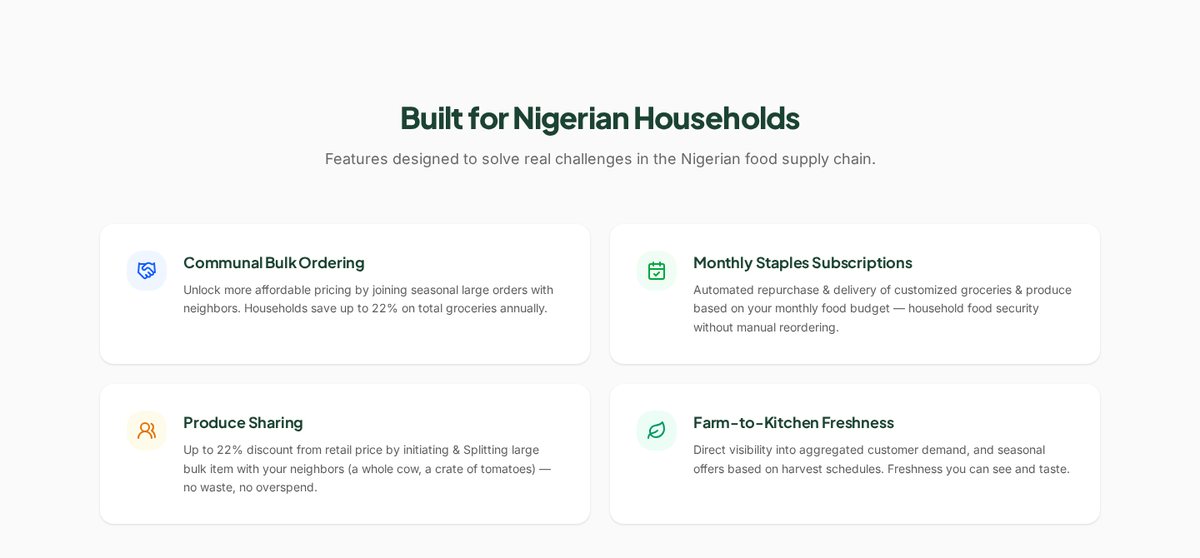
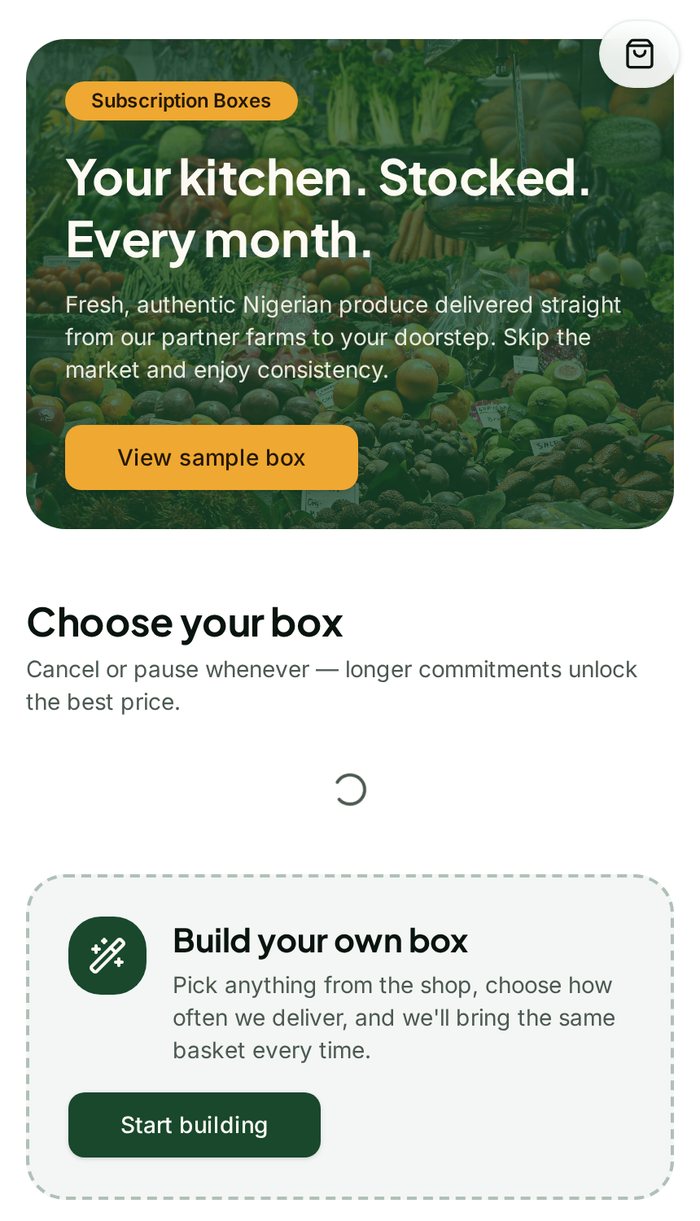
Retention is the model, not a phase: communal bulk ordering (neighbours pool an order to unlock wholesale pricing), monthly staples subscriptions (automated repurchase against a stated food budget), produce sharing (splitting a whole-cow or crate buy across a block), and a B2B portal for restaurants, hotels and canteens with bulk pricing, invoices, team approvals and credit terms.
The economics by design
The model targets roughly 22% lower household grocery cost through pooled buying, a material reduction in spoilage because demand is committed before produce moves, and higher lifetime value through subscription repurchase and a loyalty discount on annual spend. These are the design targets the product was engineered against — not audited outcomes. Realised volume, GMV and customer counts remain confidential to the venture.
Outcome
The platform is built across all four surfaces — consumer, business, admin and rider — with the first cluster in prelaunch: survey funnel live, waitlist and launch credit in market, routes and assortment set from real survey responses rather than guesses.
What Label held
Product engineering, brand system and growth — held inside the JV rather than delivered as an external engagement.
Read the thinking
Distribution Is the Product
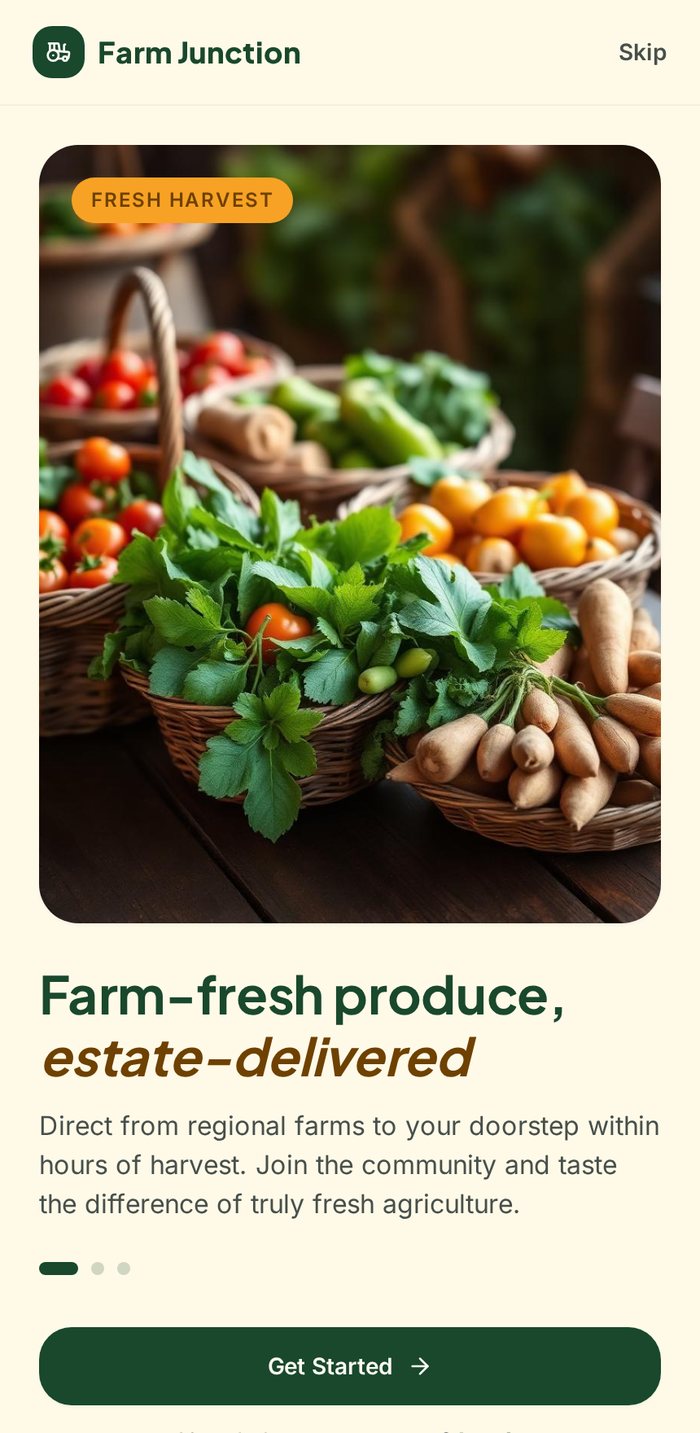
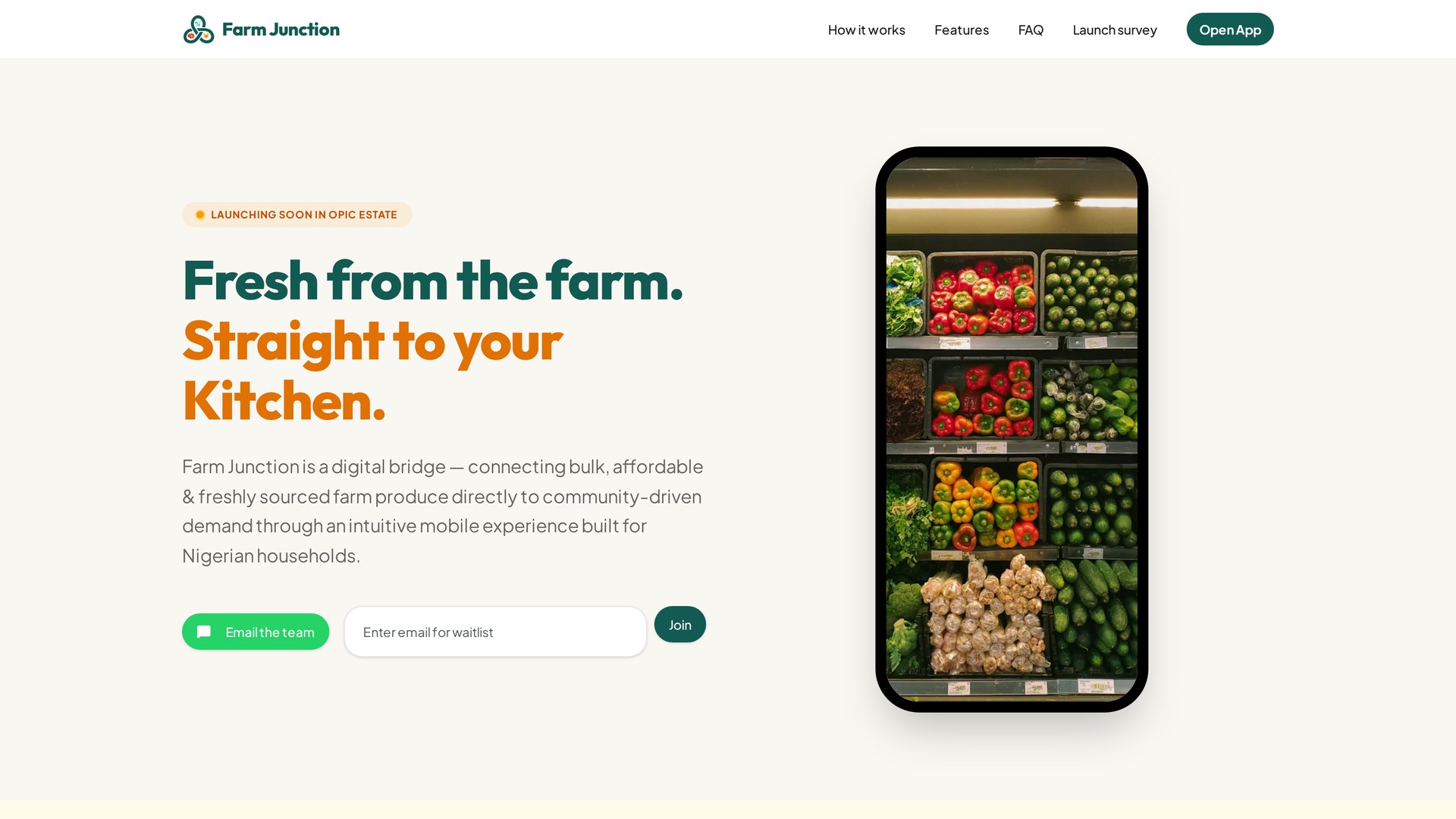
Product snapshots from the Farm Junction build. Prelaunch instance — figures shown are demo or zero-state values, not trading data.